guides
Fermented Hot Sauce From Your Pepper Glut: Mash, Wait, Blend
Turn a pile of ripe chilies into complex, deli-grade hot sauce with salt and patience — the mash method, the brine method, blending day, and the honest bottling rules.
Honest disclosure: Some links below are affiliate links — Glivox earns a commission if you purchase, at no extra cost to you. We pay full price for products we review and rankings are never paid. Read the full policy.
Every serious hot sauce you’ve ever loved — the aged tabasco styles, the funky sriracha-likes, the small-batch bottles with cult followings — starts the same way: peppers, salt, and time. Not vinegar dumped over fresh chilies (that’s the quick supermarket shortcut), but fermentation: weeks of bacterial alchemy that rounds raw heat into depth, funk, and the kind of flavor you can’t fake in an afternoon.
And here’s the good news for anyone staring at an August–September pepper glut: fermented hot sauce is barely harder than sauerkraut. Same salt math, same submersion law, one extra step (the blender). If your counter is drowning in cayennes, jalapeños or whatever the drying rack can’t absorb, this is the highest-flavor destination they have.
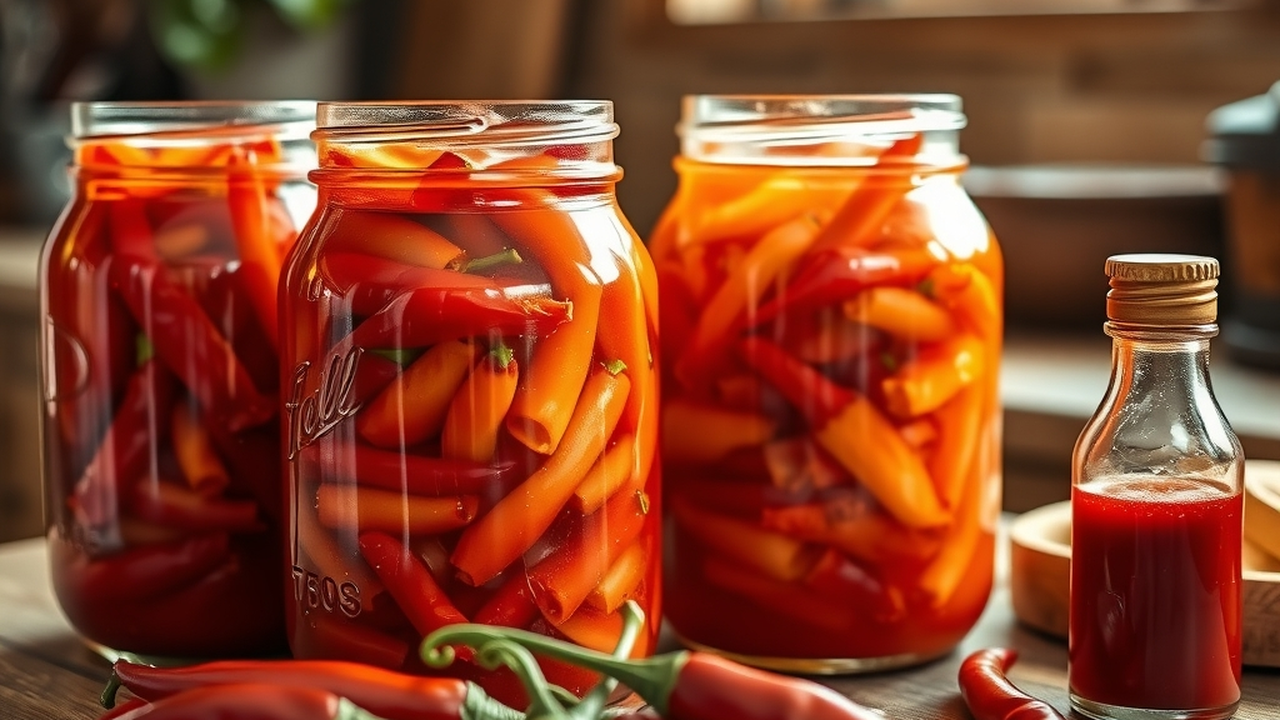
Two roads in: mash or brine
The mash method (more flavor, more attention). Roughly chop peppers (stems off, seeds optional — they add heat, not much else), pulse or pound into a coarse mash, weigh it, and mix in 2.5–3% salt by weight — slightly higher than kraut’s 2% because peppers are lower-acid company. Pack the mash into a jar, press it down, and let its own juices rise. Traditional, concentrated, and what the legendary aged sauces use.
The brine method (easier, beginner-proof). Halve or quarter the peppers, pack them whole-ish into a jar with aromatics, and cover with a 3% brine (30 g salt per liter of water). More forgiving to keep submerged — this is the version to start with if fermentation is new, and the one that behaves most like the pickle process you may already know.
Either road: everything below the liquid line, always — the one law of fermentation doesn’t take holidays for capsaicin. A zip bag of brine or a small jar makes a fine weight. Loose lid or cloth cover, room temperature out of the sun, plate underneath.
What to throw in with the peppers: garlic cloves (classic, mellow beautifully), carrot or onion chunks (body and sweetness for blending day), a few peppercorns. Keep additions to ~20% of the jar — the peppers are the show.
The waiting (1–4 weeks, your call)
Days 2–5: cloudy brine, bubbles, that sharp-fresh smell — the ferment announcing itself. From week one you technically have hot sauce material; from weeks two to four you get what you actually came for — acidity building, raw edge softening, funk deepening. Aged mashes go months (the famous ones, years, in barrels). Taste weekly with a clean spoon and call it when the flavor makes you happy.
Same field guide as every ferment: cloudy = good, white flat film = kahm yeast (skim, resubmerge, carry on), colored fuzz = something surfaced, restart. Pepper mash’s extra quirk: it separates — solids up, brine down. Stir or press it daily; separation is normal, exposure is not.
Blending day (where mash becomes sauce)
- Everything into the blender — mash or drained brine-peppers plus a splash of the fermentation liquid. Blend long; smoothness is a preference, but thorough blending is what makes a sauce instead of a slurry.
- Thin with reserved brine to your target consistency. Sauce thickens slightly in the fridge.
- The vinegar decision. Adding a splash (5–10%) of vinegar brightens flavor, stabilizes the ferment, and drops pH further — most homemade sauces take it. Purists skip it and keep the pure ferment character. Both are legitimate; taste and decide.
- Strain or don’t: strained = pourable restaurant-style; unstrained = rustic, thicker, more of everything. Save strained pulp — dried, it becomes homemade chili powder, the free bonus product.
Gloves and a ventilated kitchen for every step of hot-pepper work — blending aerosolizes capsaicin, and the cloud is real. Lid on before pressing go, face away when opening.
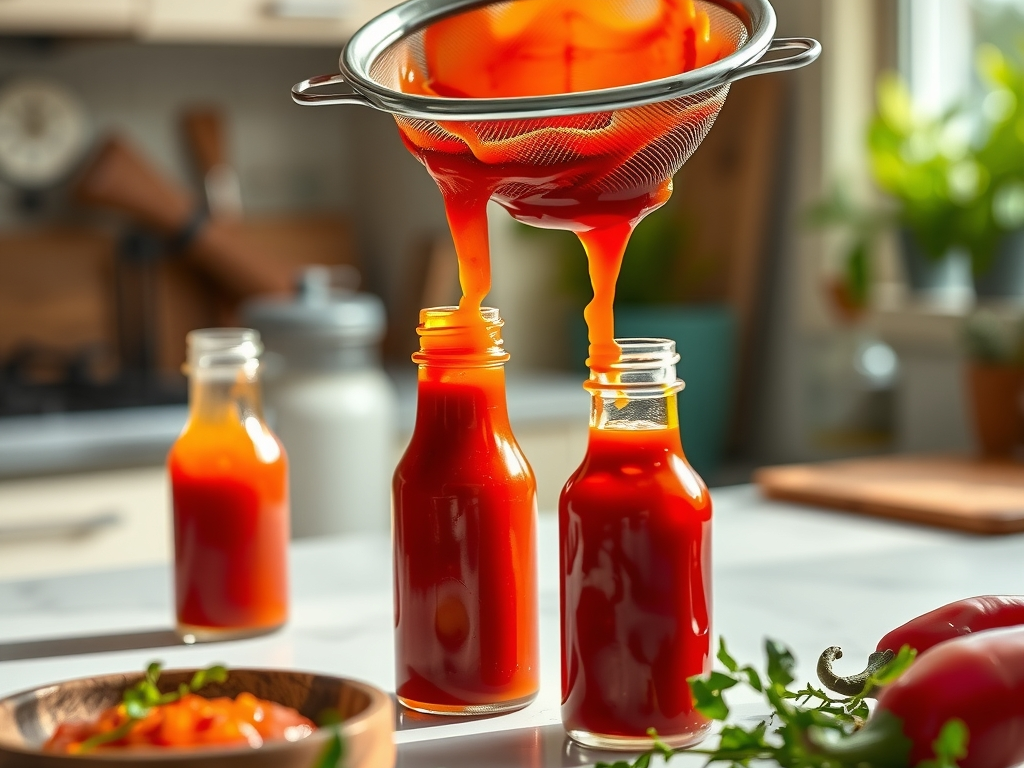
Bottling honesty (the part sauce tutorials skip)
Here’s the honest storage picture. In the fridge, your fermented hot sauce keeps 3–6+ months easily — it’s an acidic, salted, living condiment; refrigeration slows it to a crawl. This is the storage plan for essentially every home batch, and it’s zero extra work: bottle, refrigerate, shake before use (separation is natural; commercial sauces use gums).
Shelf-stable bottling is a different game with a real rule: room-temperature storage safely requires the sauce’s pH verifiably at or below 4.6 (commercial producers target well below 4.0), measured with a calibrated pH meter, usually helped by added vinegar — plus proper hot-fill or processing technique. A long ferment plus vinegar usually lands in safe territory, but “usually” isn’t a food-safety plan; without a meter, the fridge is the answer, and the same never-freelance principle as canning applies. For gifts, small bottles + “keep refrigerated” labels solve everything.
Quick wins vs. batch-ruiners
What works
- Brine method first batch, mash method when hooked - same one law
- 2.5-3% salt for peppers (a touch more than kraut) - weigh, don t guess
- Ferment 2-4 weeks minimum; the depth IS the waiting
- Bottle for the fridge; save shelf-stable dreams for a pH meter
What doesn't
- Blending fresh vinegar-splash sauce and calling it fermented (different product)
- Letting mash solids sit exposed above the brine (stir daily)
- Blending with the lid loose (capsaicin cloud - you only do it once)
- Room-temperature bottles without verified pH (fridge exists; use it)
FAQ
How do you make fermented hot sauce from fresh peppers?
Two routes: mash — chop and crush peppers, mix with 2.5–3% salt by weight, pack under their own juice; or brine — pack pepper pieces in a jar and cover with 3% saltwater (30 g/L). Either way, keep everything submerged under a weight, cover loosely, and ferment at room temperature 1–4 weeks (taste weekly). Then blend with some of the fermentation liquid, optionally add a splash of vinegar, strain to taste, bottle and refrigerate. Garlic, carrot and onion are the classic co-ferments.
How long should hot sauce ferment?
One week produces a usable young sauce; two to four weeks is the sweet spot where sharpness rounds into genuine depth and mild funk — the character that separates fermented sauce from vinegar-splash quick sauce. Serious mashes age for months (commercial legends, years). Temperature moves the clock: warm kitchens ferment faster. There’s no spoilage deadline forcing your hand — as long as everything stays submerged, you’re choosing a flavor point on a curve, not racing a clock.
Is homemade fermented hot sauce safe?
The fermentation itself has the same strong safety profile as sauerkraut and pickles: proper salt (2.5–3%) plus submersion creates acidity that hostile organisms can’t tolerate, and failures announce themselves visibly (fuzzy mold) or by unmistakable smell. The one genuine safety line is storage: refrigerated, home sauce is straightforwardly safe for months. Shelf-stable room-temperature bottling requires verified pH ≤ 4.6 with a calibrated meter — without that verification, refrigerate. Gloves and ventilation for handling and blending hot peppers protect you, not the sauce.
Why did my fermented hot sauce separate in the bottle?
Because it’s a natural product without the xanthan gum commercial sauces use — pepper solids and brine part company at rest, especially in strained, thinner sauces. It’s purely cosmetic: shake before use. To reduce it: blend longer, strain less (pulp thickens and suspends), or simmer the finished sauce briefly to help it homogenize (note: simmering pasteurizes — you trade away the living-ferment character for stability). Fridge-cold sauce also separates more slowly than room-temperature sauce.
The glut was never the problem — it was the supply chain for the best condiment in the house.
Keep reading
guides
Fermentation for Beginners: Sauerkraut, Pickles, and the Salt Math That Keeps It Safe
Turn cabbage and cucumbers into tangy, probiotic food with salt and time. The 2% rule, the submersion rule, and what's normal vs what to toss — honestly explained.
guides
Drying Herbs and Peppers at Home: Air, Oven, or Dehydrator (Honest Trade-offs)
The oldest preservation method is still the easiest — if you match it to the right crops. Hang-drying herbs, pepper ristras, oven and dehydrator honesty, and storage.
guides
How to Make Sauerkraut: One Cabbage, One Jar, Two Ingredients
Cabbage + salt + a week on the counter = real sauerkraut. The complete first-timer walkthrough — the 2% rule, the daily press, when it's done, and what every weird sight and smell means.