guides
Winter Squash: When to Pick, How to Cure, Why Yours Rots by November
Butternut, pumpkin, acorn — the thumbnail test, the 10-day cure that decides storage, and the handling rules that turn one squash patch into food until spring.
Honest disclosure: Some links below are affiliate links — Glivox earns a commission if you purchase, at no extra cost to you. We pay full price for products we review and rankings are never paid. Read the full policy.
A winter squash is a strange kind of harvest: pick it right and handle it right, and it sits on a shelf feeding you until spring with zero processing — no jars, no freezer, no sand box. Pick it wrong, or skip one unglamorous ten-day step, and the same squash is soft by Thanksgiving and liquid by Christmas.
That step is curing, and it’s the least-taught, most-decisive move in the whole squash story. With harvests starting in September, here’s the complete honest sequence: reading ripeness (the thumbnail test beats the calendar), cutting correctly (the stem you leave is a cork), the cure itself, and the storage rules that finish the job.
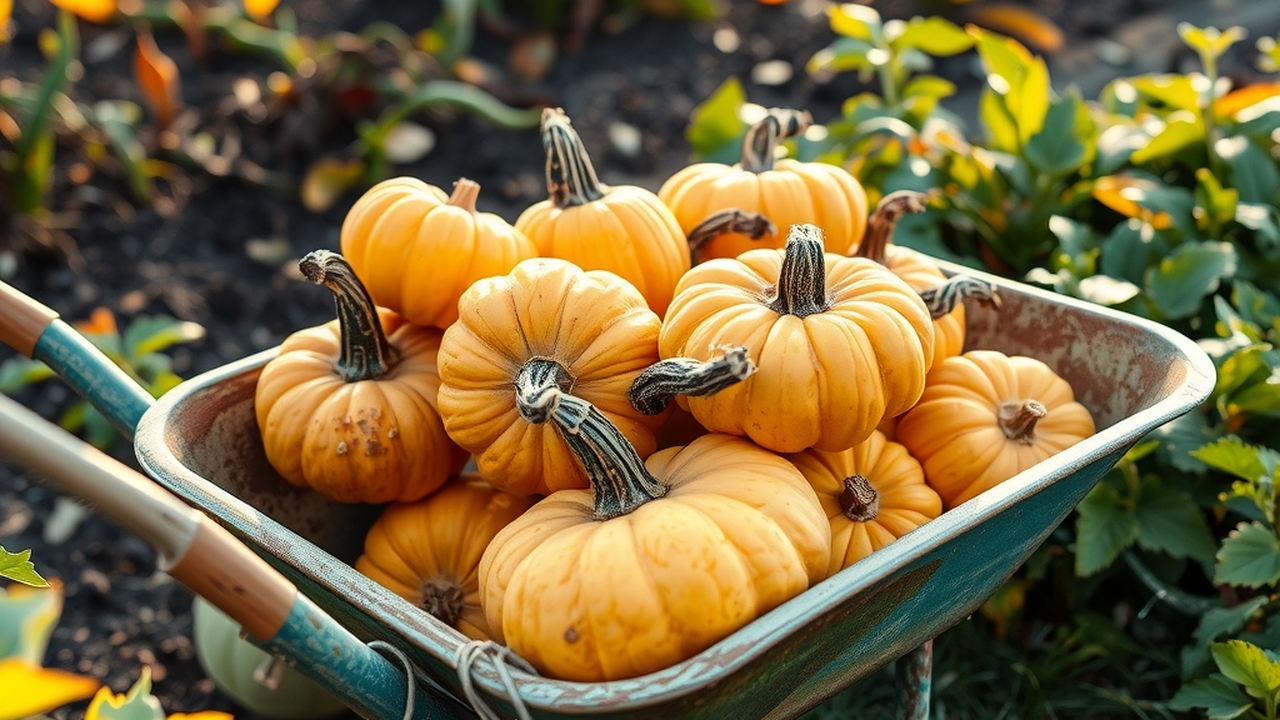
Reading ripeness (three checks, no calendar)
Seed-packet “days to maturity” is a suggestion; the squash itself reports readiness:
- The thumbnail test — the decisive one. Press a thumbnail into the rind: ripe squash resists and doesn’t dent easily. If your nail slides in like it would on a zucchini, it’s still summer squash inside — leave it.
- The stem and tendril check. The stem connecting fruit to vine hardens and dries from green to corky-brown; the little curled tendril nearest the fruit browns and shrivels. Both = the vine has finished investing.
- Color and ground-spot. Deep, saturated variety color (butternut fully tan, no green streaks; acorn dark with an orange ground patch; pumpkins full orange). The patch where the fruit sat on soil turns from pale yellow toward orange-gold on many varieties.
The frost deadline overrides everything: squash tolerate light frosts on healthy vines, but a real freeze damages fruit invisibly and ends its storage life. If a hard frost is forecast, harvest everything sizeable that passes (or nearly passes) the thumbnail test — a slightly-early squash cures onward; a frozen one is dinner this month. Dead-vine note: once vines die back, the fruit stops improving — bring it in.
Cutting day (the stem is a cork — treat it like one)
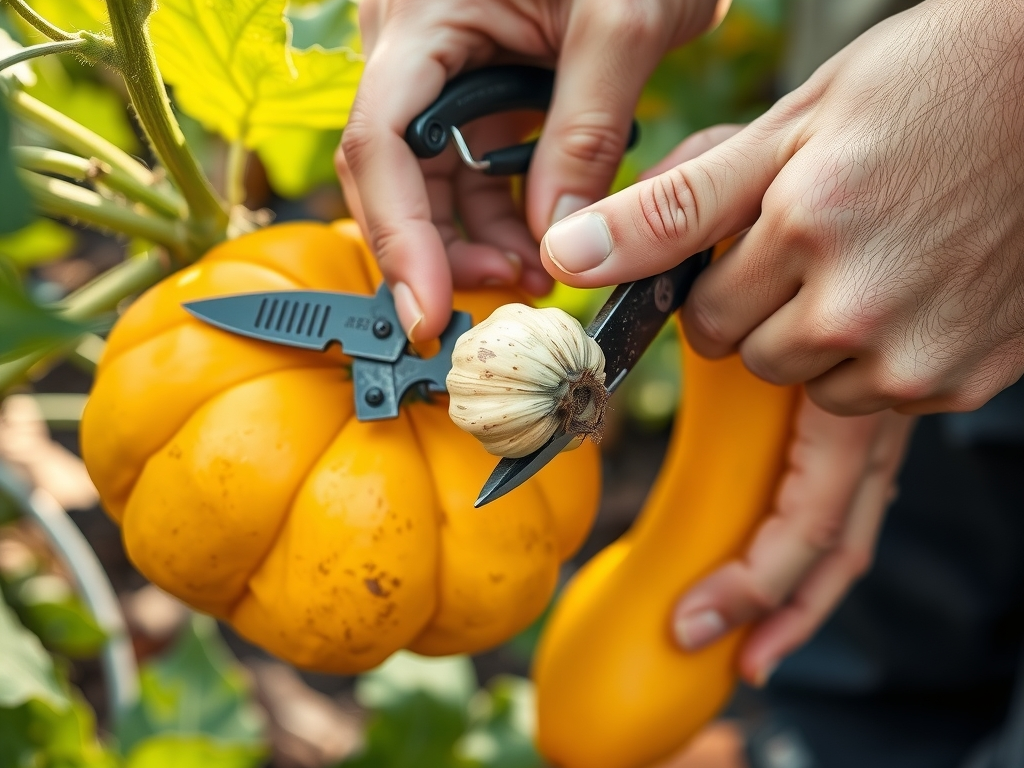
- Cut, never pull or carry by the stem. Use pruners to leave a 5–10 cm stem handle on every fruit. A snapped-out stem leaves an open wound straight into the cavity — the #1 cause of squash that rot from the top down. And that “handle” isn’t for carrying: stems tear out under the fruit’s own weight.
- Handle like eggs, sort like a banker. Every scratch, gouge and drop-bruise is a rot entry. Carry in padded loads, and run the same brutal triage as all storage crops: flawless fruit to storage, anything nicked or stemless to the eat-first pile by the kitchen.
- Don’t wash. Brush dry soil off. If disease pressure was high, some growers wipe rinds with a 1:10 bleach solution and dry thoroughly — optional, but wet squash must never go to cure.
The cure: ten days that decide five months
Curing is simple to the point of anticlimax — 10–14 days somewhere warm (25–30°C) with good air circulation: a sunny protected porch, a greenhouse bench, a warm garage window, even the garden bed itself in a dry mild week (dew and rain are the enemies; cover or carry in at night if wet).
What those ten days do: the rind hardens into real armor, minor surface scratches heal over (“suberize”), stems dry to sealed corks, and starches begin converting to sugar — cured squash genuinely tastes better. Skipping the cure is why home-grown butternuts go soft in November while the grower blames the variety.
Exception worth knowing: acorn squash and delicata are thin-skinned sprinters — cure only briefly (a few days) or not at all, and eat them first; they store 1–3 months regardless. The marathon runners are butternut (king of keeping, 4–6+ months), hubbard, kabocha, and full-size pumpkins (2–4 months).
Storage: cool-and-dry, and not with the apples
Cured squash want the cool-and-dry room, 10–15°C — the spare bedroom floor, under-bed space, a closet shelf, the dry corner of the no-cellar setup — not the humid cold that roots love, and not the refrigerator (too cold and too humid; fridge squash deteriorates faster). Single layer, not touching, on cardboard or wood rather than concrete, turned occasionally, with the same fortnight sniff-and-squeeze patrol as every stored crop. Keep them away from ripening apples — ethylene shortens squash storage the same way it sprouts potatoes.
Realistic timelines done right: butternut to March-April · kabocha/hubbard to February · pumpkins to January · acorn/delicata by Christmas. Anything going soft graduates immediately to soup, and a glut at any point diverts to the freezer as cooked purée — squash is the rare crop with a dignified exit at every stage.
What works
- Thumbnail test + corky stem beats any days-to-maturity math
- Cut with pruners, leave 5-10 cm of stem, never carry by it
- Cure 10-14 days warm and airy - the step that buys the months
- Store cool-and-DRY (10-15C), single layer, away from apples
What doesn't
- Pulling fruit off vines (torn stem = rot funnel from day one)
- Letting a hard freeze catch the patch (invisible damage, ruined storage)
- Refrigerating whole squash (cold + humid = faster decline)
- Curing acorn squash like butternut (thin skins - eat those first)
FAQ
How do I know when winter squash is ready to harvest?
Use the fruit’s own signals: the rind resists a firm thumbnail press without denting (the decisive test), the stem has dried from green to corky brown along with the nearest tendril, and the variety color is fully saturated with no green streaks. Days-to-maturity numbers are only a rough guide. Two overrides: harvest everything sizeable before any hard freeze (frozen fruit won’t store), and once vines are dead the fruit stops improving — bring it in.
Do you have to cure winter squash before storing it?
For long storage, yes — curing is the difference between squash that keeps until spring and squash that softens by November. Ten to fourteen days at 25–30°C with moving air hardens the rind, heals surface scratches, seals the stem, and converts starches toward sugar (cured squash tastes noticeably better). The exceptions are thin-skinned acorn and delicata, which skip or barely need curing and are eaten within a few months regardless. Butternut, hubbard, kabocha and pumpkins repay the full cure.
Why does my winter squash rot in storage?
Almost always one of five causes: the stem was snapped off instead of cut (an open wound into the cavity — rot from the top), the fruit was harvested immature or after a freeze, it never got cured, it’s stored too cold and humid (including the fridge), or a bruise from rough handling finally matured. Prevention is the whole article in one line: cut ripe fruit with a stem handle, cure it warm for ten days, store it cool-and-dry in a single layer, and patrol every two weeks — removing one softening squash before it leaks saves the shelf.
How long does winter squash last in storage?
Cured and stored right (10–15°C, dry, single layer): butternut is the champion at 4–6+ months, kabocha and hubbard reach midwinter and beyond, full-size pumpkins hold 2–4 months, and thin-skinned acorn and delicata run 1–3 months — eat those first. The rhythm that uses a harvest well: delicata and acorn through fall, pumpkins through the holidays, butternut into spring, with anything showing softness diverted to soup or frozen purée the week it’s noticed.
The squash did the growing all summer — ten warm days in September is all it asks of you.
Keep reading
guides
How to Preserve Your Vegetable Harvest (2026 Beginner's Guide)
Drowning in tomatoes and zucchini? A beginner's guide to preserving your vegetable harvest — freezing, canning, drying, root storage and fermenting, and which method suits each crop.
guides
Root Cellar Without a Cellar: Store Months of Food With No Basement
No basement, no problem. Garage corners, buried barrels, sand boxes and in-ground trenches — honest ways to store potatoes, carrots, squash and apples for months.
guides
Fall Garden Cleanup: What to Remove, What to Leave (Most People Clean Too Much)
The honest fall checklist: pull the diseased and the pest hotels, leave the roots and the leaves — why a too-tidy garden costs you soil, pollinators, and next spring's head start.