guides
The Sand Box: How Root Vegetables Stay Crisp Until March
One crate, damp sand, and unwashed carrots — the pre-refrigeration method that keeps carrots, beets and parsnips crisp 4-6 months. Layer by layer, with the two rules that decide everything.
Honest disclosure: Some links below are affiliate links — Glivox earns a commission if you purchase, at no extra cost to you. We pay full price for products we review and rankings are never paid. Read the full policy.
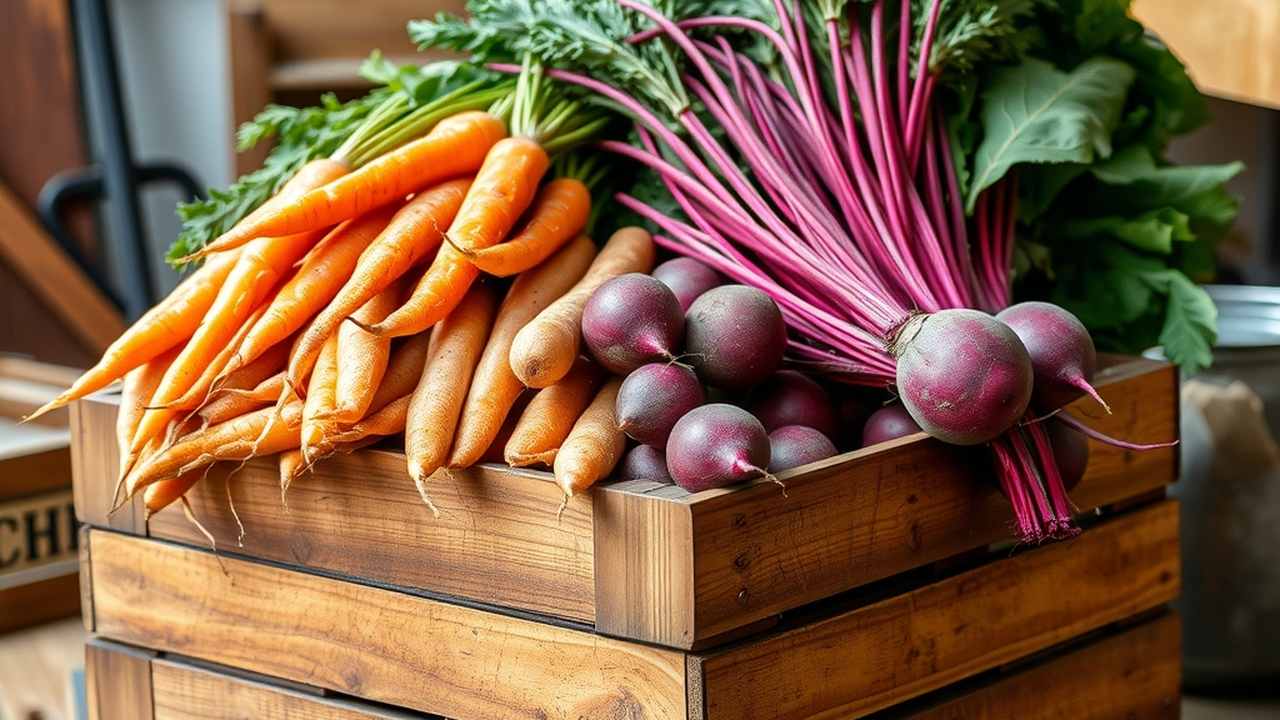
There’s a storage method so old it predates the refrigerator by centuries, so cheap its entire bill of materials is “a crate and some sand,” and so effective that a January carrot pulled from it snaps like it was harvested that morning. Grandmothers on three continents knew it; most gardening sites bury it under fridge tips. It deserves better billing, because for carrots, beets, parsnips, turnips and winter radishes, the sand box is still the champion: 4–6 months of crisp storage, no electricity, no cellar required.
The whole method fits in one sentence — layer unwashed roots in barely-damp sand somewhere cold — but the difference between March carrots and a box of disappointment lives in the details. Here they are, in build order.
Why sand works (the physics in one paragraph)
A root vegetable in storage is fighting exactly one enemy: water loss. A carrot is ~88% water, and the crisp snap you want in February is that water, held under pressure in its cells. Open air — even cold air — pulls moisture out steadily, which is why loose carrots in a garage go rubbery in weeks. Damp sand solves it by wrapping every root in a jacket of near-100% humidity while still letting the skin breathe, and by physically separating roots so one bad carrot can’t preach rot to the congregation. Cold + humid + separated: that’s the entire recipe, and sand delivers all three for the price of a bag of play sand.
Harvest for the box (this part starts in the garden)
Storage quality is decided before anything touches sand:
- Wait for cold soil. Roots harvested after a few light frosts store better and taste sweeter — cold triggers the plant to convert starch to sugar, its own antifreeze. Dig before the ground actually freezes solid.
- Dig on a dry day, and don’t wash. Brush off loose soil and stop there — the universal rule of storage crops. Washing strips the skin’s protective layer and adds the moisture you spent all this effort controlling.
- Twist the tops off, don’t cut close. Leave ~1–2 cm of stem. Greens left on pump water out of the root within days (the leaves keep transpiring); cutting into the crown opens a wound. Twist beet tops rather than slicing — cut beets bleed.
- Triage ruthlessly. Forked, nicked, cracked or fork-stabbed roots go to the kitchen, not the box. In a months-long game, every wound is a countdown timer.
Let the roots air-dry a few hours so surfaces aren’t wet, and they’re ready to pack.
Packing the box, layer by layer
The container: a wooden crate, a sturdy cardboard box, a plastic tote with a few holes drilled for air, or a bucket for small batches. Nothing airtight — sealed plastic turns the humidity you want into the condensation you don’t.
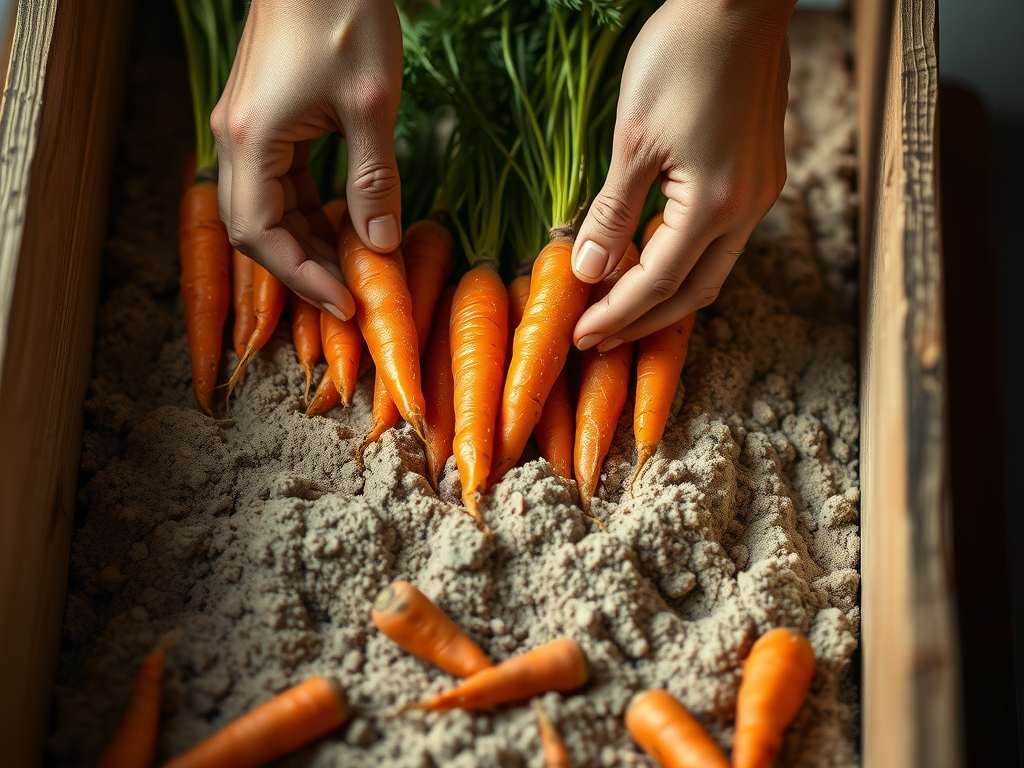
The sand: plain play sand or builder’s sand, barely damp — the moisture of sand at the beach above the tide line. Squeeze a handful: it should hold a shape for a second, then crumble. If water drips out, it’s too wet (rot fuel); bone-dry sand pulls moisture instead of holding it. No sand nearby? Slightly damp sawdust, coco coir, or even sifted garden soil work on the same principle — sand just resists rot best.
The packing rhythm:
- 5 cm of sand on the box floor.
- One layer of roots, not touching — a finger-width apart, laid flat.
- Cover completely with 2–3 cm of sand. Every root fully buried.
- Repeat — layers of roots and sand like a lasagna — finishing with a generous sand blanket on top.
- Keep carrots and beets in separate boxes (or at least separate ends): beets shrug off a little jostling that scuffs carrots, and you’ll dig for them at different rates.
One practical trick from people who do this every year: pack in order of size, biggest at the bottom. Big roots store longest, so you eat downward through the box in the same order the box wants to be eaten.
Where the box lives (and the monthly minute)
The target climate is 0–5°C and out of direct light — the classic cool-corner shortlist: an unheated garage against the house wall, a cold basement stairwell, an enclosed porch, a shed that doesn’t hard-freeze for long stretches. Brief dips below zero won’t hurt a sand-insulated box (the sand itself buffers several degrees); a warm furnace room will quietly turn February carrots to sponge.
Then the entire maintenance schedule: one minute a month. Excavate a test root, check firmness, sniff for anything sour, and re-bury. If the top sand feels bone-dry, mist it lightly. If you find one soft root, remove it and its immediate neighbors’ sand, and move on — the layer system has already contained the damage. That’s it. No stirring, no fussing: the box wants to be ignored.
Expect 4–6 months for carrots and beets, similar for parsnips and winter radishes (parsnips actually sweeten further in storage). By the time the box runs out, you’re weeks from the first spring sowings — which is the whole quiet point of the method: it makes the garden’s season circular instead of ending it in October.
What works
- Harvest after light frosts, dry day, unwashed - twist tops to 1-2cm
- Barely-damp sand, roots buried in layers, never touching each other
- Store at 0-5C dark - garage, cold basement, porch; sand buffers brief freezes
- One test-root check per month; biggest roots at the bottom, eat downward
What doesn't
- Washing roots or leaving full greens on (both drain the root in days)
- Wet sand instead of barely damp - the number one rot cause
- Airtight lids on plastic totes (condensation rains rot onto the top layer)
- Storing damaged roots because they were too pretty to eat first
FAQ
How long do carrots and beets last stored in sand?
Four to six months in the right conditions — roughly October’s harvest lasting into March. The requirements: healthy unwashed roots, barely-damp sand keeping every root fully buried and separated, and a storage spot around 0–5°C such as an unheated garage or cold basement. Parsnips and winter radishes store on the same timeline, and parsnips actually improve, converting starch to sugar in the cold. The practical limit is usually temperature: a spot that runs warm shortens everything.
How damp should the sand be for storing root vegetables?
Like beach sand above the tide line: a squeezed handful should briefly hold its shape, then crumble — no drips, no dust. Too wet is the classic failure (it feeds rot instead of preventing it); bone-dry sand slowly pulls water out of the roots, defeating the purpose. Check the top layer monthly and mist it lightly if it has dried out. Plain play sand or builder’s sand from any hardware store works perfectly, and slightly damp sawdust or coco coir are fine substitutes.
Should I wash carrots before storing them in sand?
No — washing is the most common way to ruin a storage batch. Scrubbing strips the skin’s natural protective layer and adds surface moisture, both of which invite rot during months in the box. Brush off loose soil on a dry day and leave the rest; the sand doesn’t mind, and the dirt washes off in seconds in March when you actually cook them. The same no-wash rule applies to every storage crop, from potatoes to onions.
Why did my sand-stored carrots go soft or rot?
Soft-and-rubbery means water loss: the sand was too dry, the roots weren’t fully buried, or the spot ran too warm — all fixable mid-season by re-packing with properly damp sand and relocating somewhere colder. Rot means excess moisture or contact: sand squeezed wet, roots touching each other, a damaged root left in the box, or an airtight lid raining condensation. Pull affected roots and their surrounding sand, leave drainage holes open, and triage harder next fall — every stored root must go in flawless.
A refrigerator holds a week of carrots. A $6 bag of sand holds a winter of them — the old methods didn’t die, they just stopped getting advertised.
Keep reading
guides
Root Cellar Without a Cellar: Store Months of Food With No Basement
No basement, no problem. Garage corners, buried barrels, sand boxes and in-ground trenches — honest ways to store potatoes, carrots, squash and apples for months.
guides
Fall Garden Cleanup: What to Remove, What to Leave (Most People Clean Too Much)
The honest fall checklist: pull the diseased and the pest hotels, leave the roots and the leaves — why a too-tidy garden costs you soil, pollinators, and next spring's head start.
guides
Curing and Storing Onions: From Flopped Tops to a Braid on the Wall
When onion tops flop, the clock starts — the 2-3 week cure, the papery-neck test, the honest truth about sweet onions, and how to braid a year's supply onto one nail.