guides
How to Grow Food Indoors: The Apartment Guide That Respects Physics
What actually grows inside — and what dies pretending. The honest indoor roster, why windowsills fail, the $30 light that changes everything, and a realistic harvest forecast.
Honest disclosure: Some links below are affiliate links — Glivox earns a commission if you purchase, at no extra cost to you. We pay full price for products we review and rankings are never paid. Read the full policy.
“Grow your own food in your apartment!” is one of the internet’s favorite promises, usually illustrated with a windowsill jungle that — honest disclosure — was grown in a greenhouse and arranged for the photo. Then winter comes, the basil dies, and another would-be grower concludes indoor food is a fantasy.
The truth sits usefully in the middle: you can grow real, worthwhile food inside an ordinary apartment — herbs that replace the $3 plastic packets forever, salads on repeat, sprouts and microgreens at production speed — if you respect the one resource indoors that’s brutally scarcer than outside: light. This is the honest guide: what actually grows inside, why the windowsill fails without help, the $30 fix, and what a realistic indoor harvest looks like per month.
TL;DR — the honest indoor pyramid
Indoors, rank crops by light appetite. Tier 1, nearly light-proof: sprouts (no light at all, harvest in 5 days) and microgreens (any bright spot, 10–14 days) — the true production crops of apartment growing. Tier 2, doable on a good window or cheap light: leaf lettuce, spinach, arugula, green onions (regrow endlessly from grocery stubs), mint, parsley, chives. Tier 3, needs a real grow light: basil, cilantro, dwarf kale and chard, and pea shoots at scale. Tier 4, mostly a poster, honestly: fruiting crops — tomatoes, peppers, strawberries — which want 12–16 hours of serious light and still yield modestly; grow one dwarf variety for joy, never for groceries. The single biggest upgrade at any tier: a $25–40 full-spectrum LED on a timer — it converts “surviving” to “producing” and costs pennies a month to run.
Buy it if
the herbs-greens-microgreens stack under one cheap LED — it genuinely offsets grocery spending and runs all winter
Skip it if
the indoor tomato dream as a food strategy — the light bill for real fruit yields exceeds the farmers market by a wide margin
Try instead
Got any balcony at all? Even 1 m2 outside out-produces most indoor setups all season - run indoors as the winter wing
The light problem, stated honestly (it decides everything)
A sunny outdoor bed receives light in a different league than any window — glass, angles, and seasons cut indoor light to a small fraction, and human eyes (which auto-adjust) are terrible judges of the difference. That’s why “bright” rooms grow pale, stretched, flavorless plants: a room that feels bright can be 10–50x dimmer than a garden bed.
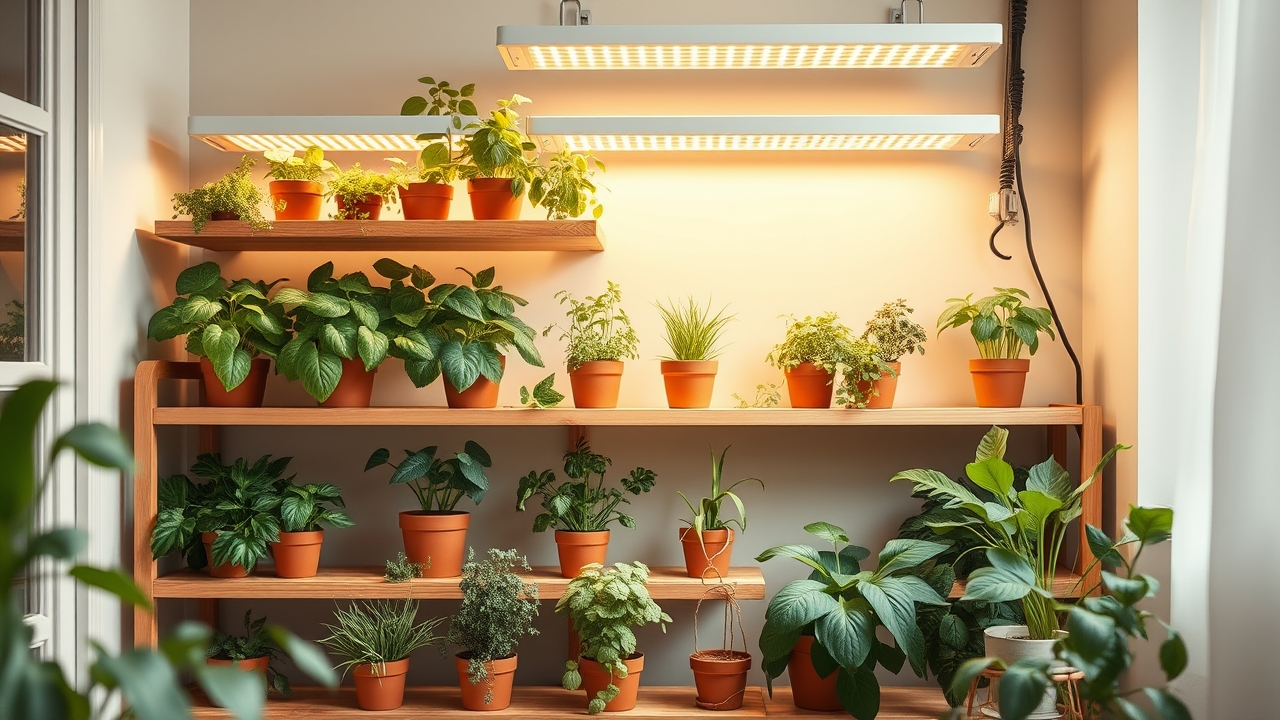
Practical translation: a genuinely unobstructed south-facing window (north-facing in the southern hemisphere) is the only windowsill that reliably grows Tier-2 crops unassisted — and even it struggles in midwinter. Everything else wants the fix: a full-spectrum LED grow light — clip-on for a windowsill, a shop-light bar for a shelf — $25–40, on a plug timer for 12–14 hours a day, hung 15–30 cm above the leaves. Running cost at typical rates: $1–3 a month. This one purchase is the difference between the sad-windowsill experience and an actual producing corner, and it’s why every serious apartment grower owns one before owning a second pot. (The full container rules — real potting mix, drainage holes, little-and-often feeding — apply indoors unchanged.)
$1-3/mo
Electricity for a small LED grow light 12-14 h/day - the gap between windowsill survival and actual indoor production, at pocket change
The production floor: sprouts and microgreens
If the goal is food (not decor), start where yield-per-effort peaks:
Sprouts need no light, no soil, no equipment beyond a jar with a mesh lid: soak seeds (mung, lentil, radish, broccoli), rinse twice daily, eat in 4–6 days. A $4 bag of seed produces jar after jar. Food-safety honesty: buy seeds sold for sprouting (tested lots), rinse religiously, and refrigerate promptly — warm stagnant jars are the one way sprouts go wrong.
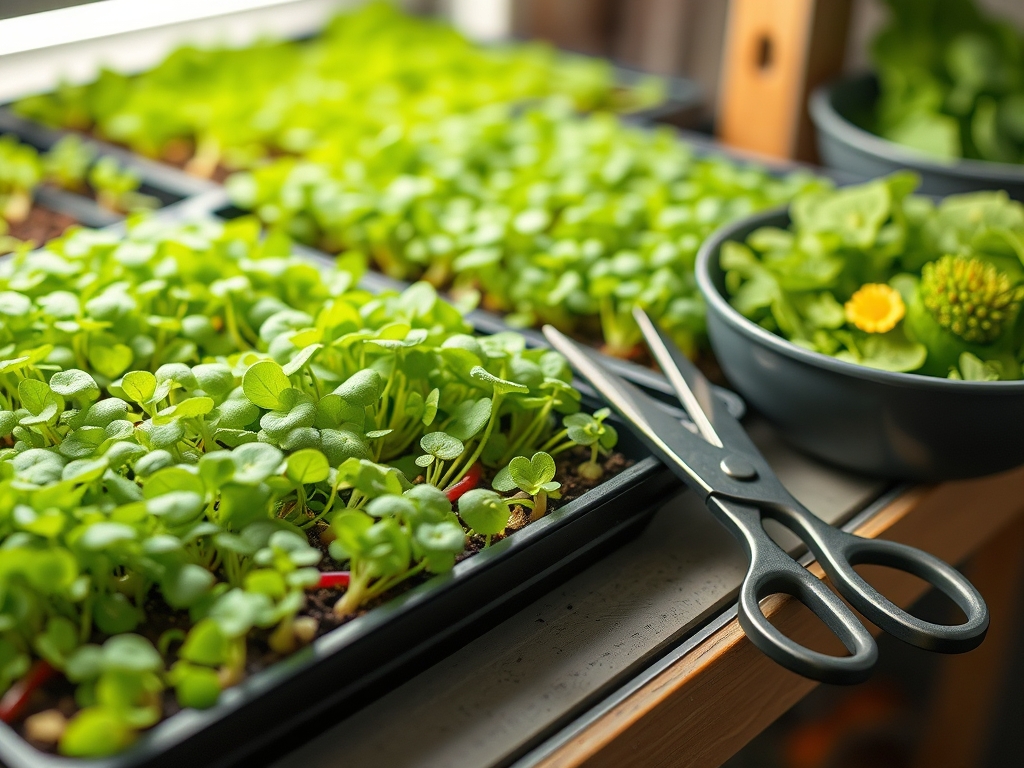
Microgreens are the apartment’s cash crop: a shallow tray of potting mix, seeds sown thick (pea, sunflower, radish, broccoli), any bright spot or the LED, scissor-harvest in 10–14 days at several dollars’ retail value per tray. A two-tray rotation on one shelf yields salad toppings continuously, forever, in half a square meter. Spent trays go straight to the worm bin — the apartment loop closes neatly.
The steady middle: herbs, greens, and the regrow game
- Herbs are the highest-value real plants indoors — the full keep-them-alive rules in one line: water by finger-test not schedule, and give basil the LED while mint and parsley tolerate an east window. A producing basil + mint + chives corner replaces a surprising grocery line item.
- Cut-and-come-again greens: leaf lettuce, spinach, arugula sown thick in wide shallow containers, outer leaves harvested weekly. Under a light bar, a window-box-sized planter yields a salad a week through winter.
- The regrow tricks that are actually worth it: green onions from grocery stubs in water (endless, genuinely), and celery/romaine bases for a bonus cutting or two (fun, modest). Regrow content promising whole vegetables from scraps is engagement bait — stubs regrow leaves, not groceries.
- Winter note for gardeners: this indoor stack is exactly what the fall garden hands off to — when the outdoor season closes, the LED shelf carries fresh greens until spring — and the outdoor herbs get their own winter sorting (most stay outside; only the tender ones come in).
The honest ceiling: fruiting crops indoors
Tomatoes, peppers and strawberries indoors are where physics sends the bill. Fruiting needs 12–16 hours of strong light, pollination help (you, with a brush or a daily stem-shake), warmth, and patience — and a flawless run on a dwarf tomato yields a bowl, not a pantry. Run the numbers and indoor fruit costs multiples of market price. Grow one dwarf cherry tomato or compact chili under a good light because it’s delightful — and know it’s a pet with benefits, not a food plan. (Peppers, honestly, are the best of the tier: compact chili plants fruit respectably under a modest light and double as decor.)
Quick wins vs. apartment-garden killers
What works
- One $30 LED on a 12-14h timer BEFORE buying more plants
- Microgreens two-tray rotation - the real production engine
- Green-onion stubs in water: the one regrow trick that fully delivers
- Finger-test watering + drainage holes (indoor pots drown quietly)
What doesn't
- Trusting a "bright room" (eyes lie about light by 10-50x)
- The indoor tomato-as-groceries plan (physics invoices you monthly)
- Pots without drainage on windowsills (root rot with a view)
- Scrap-regrow fantasies (stubs give leaves, not vegetables)
FAQ
What food can you realistically grow in an apartment?
Ranked by yield-per-effort: sprouts (jar, no light, 5 days), microgreens (tray rotation, 10–14 days — the true apartment production crop), then herbs (basil, mint, chives, parsley) and cut-and-come-again greens (leaf lettuce, spinach, arugula) with a good window or a cheap LED, plus endlessly-regrowing green onions. Fruiting crops — tomatoes, peppers — are possible under stronger light but yield modestly; treat one dwarf plant as a hobby, not a food source. That stack, run well, covers herbs and salad greens for a household most of the year.
Do I need a grow light to grow food indoors?
For anything beyond sprouts, almost certainly yes — unless you have a truly unobstructed south-facing window, and even that fades in midwinter. Indoor light is 10–50x weaker than a garden bed, which human eyes disguise. The fix is small: a $25–40 full-spectrum LED (clip-on or bar), 15–30 cm above the plants, 12–14 hours a day on a plug timer, costing $1–3 a month in electricity. It’s the single highest-impact purchase in indoor growing — buy it before the second plant, not after the third failure.
Are microgreens worth growing at home?
They’re the best value in all of indoor food growing: seeds sown thick in a shallow tray of potting mix, harvested with scissors in 10–14 days, at a retail equivalent of several dollars per tray. A two-tray rotation under one LED (or on a bright sill) produces continuously in half a square meter, and the big-seed varieties — pea shoots, sunflower, radish — are cheap to buy in bulk. Compared with sprouts they add real flavor variety; compared with full plants they’re 5–10x faster. Most “can I actually grow food inside?” journeys should start here.
Can you grow tomatoes indoors in winter?
You can, and it’s a fun project — but be honest about the terms: a dwarf variety, a genuinely strong light running 12–16 hours daily, hand-pollination (shake flowering stems each day), warmth, and roughly three months for a modest bowl of fruit. As economics it loses to any market; as a hobby with edible dividends it’s lovely. If your goal is winter food from an indoor setup, the herbs-greens-microgreens stack delivers many times the harvest per watt — and compact chili peppers out-perform tomatoes if you want something fruiting under a small light.
Glivox publishes practical, honest guides for homesteaders and backyard growers — indoors, light is the soil.
Keep reading
guides
Container Vegetable Gardening: How to Grow Food in Pots (2026 Guide)
No yard? No problem. A practical guide to growing vegetables in containers — which pots, what soil, the best crops for pots, and how to keep container plants watered and thriving through summer.
guides
Self-Watering Containers DIY: The $12 Build That Ends Daily Watering
Two buckets, a cup, and a tube = a container that waters itself for days. The honest build guide, which crops love wicking beds, and the overflow hole everyone forgets.
guides
Worm Composting for Beginners: A Farm in a Tote Box (Even in an Apartment)
Red wigglers turn kitchen scraps into the best fertilizer in gardening, indoors, without smell — the honest setup for $15, feeding rules, and fixes for every gross scenario.