comparisons
Reconditioning Old Batteries vs Buying New: Where the $47 Course Math Breaks
Can you really revive dead batteries instead of replacing them? The honest ledger: which chemistries respond, what the gear costs, when a $47 course pays — and when LiFePO4 ends the debate.
Honest disclosure: Some links below are affiliate links — Glivox earns a commission if you purchase, at no extra cost to you. We pay full price for products we review and rankings are never paid. Read the full policy.
Somewhere in your garage there’s probably a dead battery — a car battery that quit, a golf-cart or solar-bank deep-cycle that faded, a drill pack that won’t hold. The reconditioning pitch says: don’t replace them, revive them, and a $47 course will teach you how. The replacement industry says: batteries are consumables, buy new. Both sides have an obvious interest, so let’s do the math neither sales page will.
Disclosure first: Glivox earns a commission on the course discussed below; our review scored it a deliberate middle 3.0, and this comparison keeps the same knife out.
Start with the only question that matters: which battery, which death?
“Reconditioning” isn’t one technique — it’s a family of chemistry-specific procedures, and honesty starts by sorting your dead battery into one of three boxes:
Box 1 — Lead-acid that died of sulfation (the honest sweet spot). Flooded lead-acid batteries — cars, tractors, golf carts, older deep-cycle banks — that faded from sitting discharged often suffer sulfate crystal buildup, and this is the one failure mode where reconditioning has real, repeatable science behind it: controlled overcharge (equalization), desulfation cycles on a smart charger, electrolyte top-up with distilled water. Realistic outcome on a good candidate: partial capacity recovery that buys months to a couple of years of further service. Not new-battery performance — useful-life extension.
Box 2 — Lead-acid that died of age or physical failure. Shed a plate, shorted a cell, cracked a case, or simply completed its cycle life: no procedure revives mechanical death. A battery that won’t hold any charge after a proper desulfation attempt is telling you which box it’s in.
Box 3 — Lithium (power tools, phones, LiFePO4 banks). The honest answer is mostly no: lithium packs are protected by management circuits, degrade chemically in ways home procedures don’t reverse, and are genuinely hazardous to open. “Reviving” a lithium pack usually means replacing cells — a soldering project with real fire risk that we don’t recommend to beginners, full stop.
So the entire reconditioning question collapses to: do you own Box-1 batteries, and more than one of them?
The actual ledger
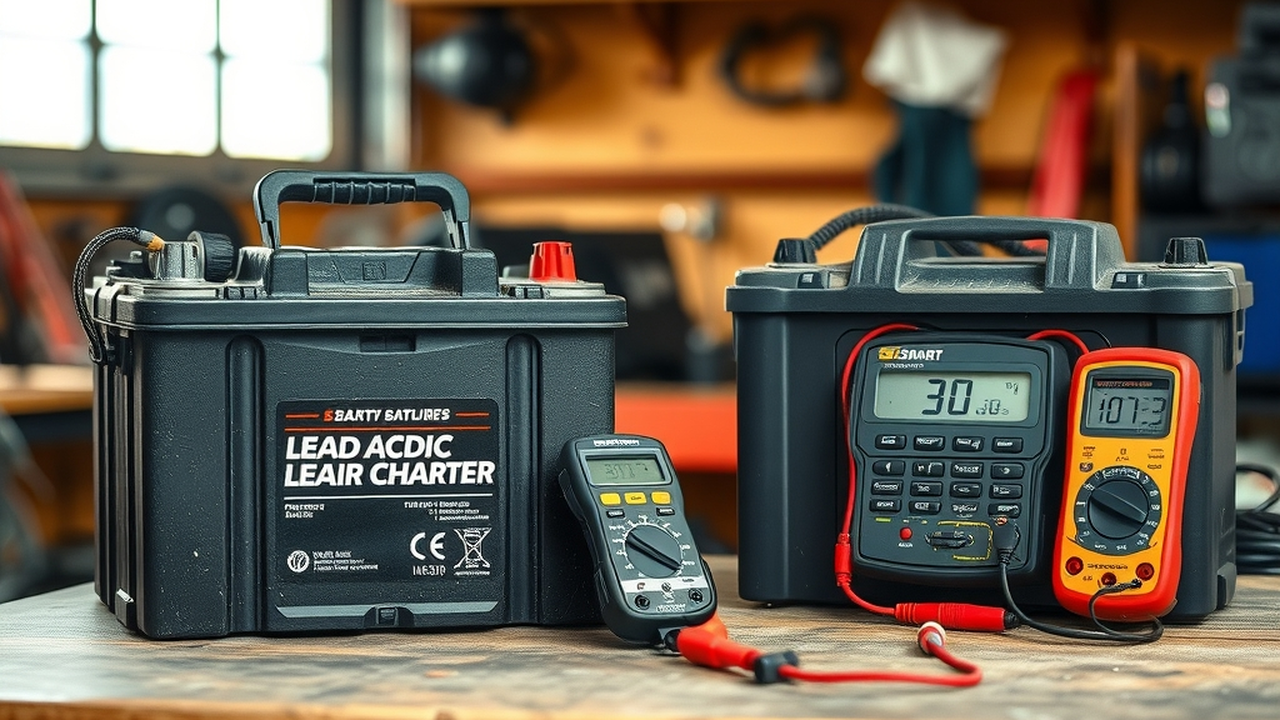
The reconditioning kit: a smart charger with desulfation mode ($40–90, one-time), a multimeter ($15–25), a hydrometer for flooded cells ($10), distilled water, safety glasses and gloves (non-negotiable — this is sulfuric acid work). Call it $70–130 of tooling you keep forever. Knowledge: free-but-scattered on forums and videos, or consolidated in the $47 course.
What replacement costs: car battery $120–200 · golf-cart deep-cycle $150–300 each (and they live in sets) · a small solar bank’s lead-acid pair $200–400. One successful recondition on any of these covers the entire toolkit; a golf-cart or solar-bank owner with six batteries is looking at four figures of replacement exposure.
The honest hit rate: even proponents’ numbers put good-candidate success at “often, partially” — not always, not fully. Budget emotionally for 50–70% of Box-1 attempts yielding worthwhile recovery, and you’ll be calibrated about right.
The verdict by owner type:
- Multiple lead-acid batteries + tinkerer temperament (golf cart, boat, RV, tractor fleet, legacy solar bank): reconditioning is genuinely worth learning — the math clears easily and the skill compounds.
- One car battery, no workbench: buy the new battery. The toolkit + learning curve for a single save rarely pays, and a failing starter battery that strands you costs more than it saved.
- Building a solar bank today: the debate is ending on its own — modern LiFePO4 outlives lead-acid several times over, and the right move is buying the better chemistry once, not learning to nurse the old one.
So is the $47 course worth it?
Our full review lands where this comparison does: the underlying lead-acid techniques are legitimate; the marketing oversells them. The sales page implies routine full resurrections of everything with terminals — reality is partial recovery, on the right chemistry, most of the time. What the course actually offers is consolidation: one organized sequence of procedures (across battery types, with the lead-acid material being the genuinely useful core) instead of a weekend of contradictory forum threads. ClickBank’s 60-day refund applies, and the honest buyer profile is the Box-1 fleet owner above — nobody else.
Quick wins vs. money-losers
What works
- Sort the dead battery FIRST: sulfated lead-acid = the only real candidate
- A $60 smart charger with desulfation mode is the core tool either way
- Fleet owners (golf cart, RV, boat, solar bank) - the math clears fast
- Safety kit before first attempt: glasses, gloves, ventilation, no sparks
What doesn't
- Expecting new-battery performance from any revival (partial is the win)
- Opening lithium tool packs after a YouTube video (genuine fire risk)
- Tooling up $130 to save one $140 car battery
- Nursing lead-acid for a new solar build when LiFePO4 ends the argument
FAQ
Does battery reconditioning actually work?
On the right battery, partially, often — and that precise wording matters. Flooded lead-acid batteries that faded from sulfation (sitting discharged) respond to real, documented procedures: equalization charging, desulfation cycles, electrolyte correction. Typical success is meaningful partial capacity recovery extending service by months to a couple of years — not factory-new performance. Batteries dead from age, shorted cells or physical damage don’t come back, and lithium packs are largely outside safe home-revival territory. Anyone promising universal resurrection is selling.
Is it cheaper to recondition a battery or buy a new one?
Depends entirely on fleet size. The toolkit (smart charger with desulfation, multimeter, hydrometer, safety gear) runs $70–130 once. Against a single $140 car battery with an uncertain success rate, replacement usually wins. Against a golf cart, boat, RV or solar bank running four to eight lead-acid batteries at $150–300 each, one round of successful reconditioning pays for everything and the skill keeps paying. That’s the honest dividing line: one battery = buy new; a fleet = learn the craft.
Can you recondition lithium-ion batteries at home?
Mostly no, and we don’t recommend trying. Lithium packs sit behind battery-management circuits, fail through chemical degradation home procedures can’t reverse, and carry genuine fire risk when opened, punctured or charged outside spec. What’s sometimes possible — replacing individual cells in a tool pack — is a soldering project for experienced hands, not a beginner money-saver. For phones, laptops and power tools, replacement packs (or the manufacturer’s battery program) are the sane answer; save reconditioning ambitions for lead-acid.
Should I recondition old lead-acid batteries for my solar setup?
If you already own a lead-acid bank: yes, learning maintenance and desulfation extends what you have and the economics are excellent. If you’re building or upgrading a system today: no — put the money toward LiFePO4 instead, which delivers several times the cycle life, deeper usable discharge and a fraction of the maintenance. Reconditioning is a skill for keeping legacy lead-acid alive, not a strategy for new builds; the chemistry race has been decided.
Batteries are chemistry, not magic — the honest wins are partial, specific, and only profitable in fleets.
Keep reading
reviews
DIY Home Energy Review: Is the $49 Solar Course Worth It? (2026)
An honest review of DIY Home Energy — what the $49 video course actually teaches about home solar, where the savings claims oversell, and whether it's a smart first step before you buy panels.
reviews
EZ Battery Reconditioning Review 2026: Legit Skill or Overhyped Course?
An honest look at the $47 EZ Battery Reconditioning course — what battery reconditioning can genuinely do, where the sales page oversells, and who should skip it.
guides
Off-Grid Solar for Beginners: Kits vs DIY Builds (What to Buy First)
Solar kits, component DIY, or a $49 course? The honest beginner path into off-grid solar — real watt-hour math, what each route costs, and the upsells to walk past.