guides
Emergency Food Pantry Basics: Two Weeks of Eating You Already Like
No buckets of mystery powder — a real emergency pantry is two weeks of shelf-stable food your family already eats, rotated through normal cooking. The honest build, list, and rotation.
Honest disclosure: Some links below are affiliate links — Glivox earns a commission if you purchase, at no extra cost to you. We pay full price for products we review and rankings are never paid. Read the full policy.
The survival-food industry would like you to believe emergency food means buckets of 25-year freeze-dried lasagna at $200 a pail. Meanwhile, the actual emergencies households face — storm outages, boil-water advisories, a lost job, a supply hiccup, two weeks of illness where nobody shops — are all solved by something dramatically cheaper and less dramatic: a deeper version of the pantry you already have.
The principle that makes this work (and makes the buckets mostly unnecessary) fits in one sentence: store what you eat, eat what you store. Food you actually like, in shelf-stable form, bought gradually, rotated through normal cooking so nothing ever expires unloved. It pairs with your stored water as the other half of basic household resilience — and if you garden, your preserved harvest is already a wing of it.
The one-sentence system, expanded slightly
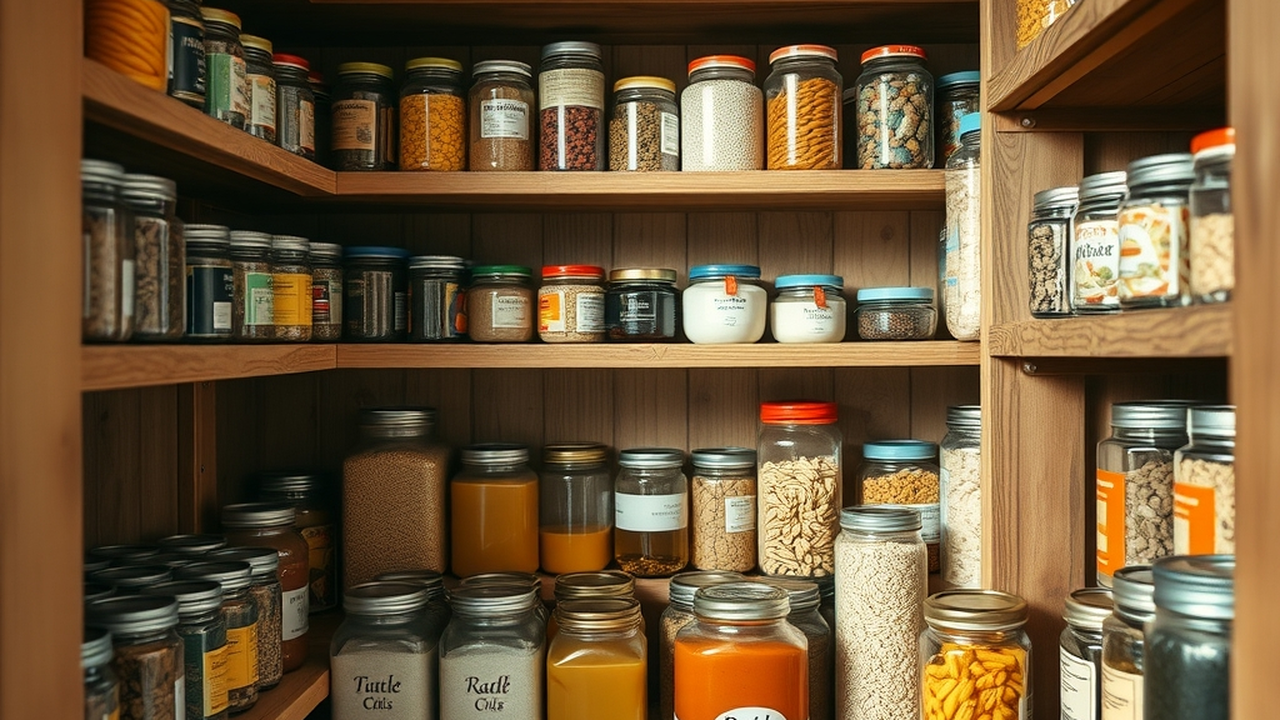
Aim for two weeks of food that needs no refrigeration and minimal cooking, assembled from things your family already eats weekly. Buy it two-or-three extra items per grocery trip (the $10/week method — a full pantry in ~3 months with no budget shock). Store it where you can see it, use it constantly — tonight’s dinner pulls from the pantry, this week’s shopping replaces what tonight used — and rotation stops being a chore because it’s just… cooking.
That rotation habit is the entire difference between a working pantry and the sad shelf of expired mystery cans every household discovers eventually. Dedicated “emergency food” fails because it’s separate: never eaten, never checked, expired when needed. Food you eat weekly literally cannot expire on you.
2 weeks
The pantry depth that covers the disruptions that actually happen - built at ~$10 per grocery trip over three months, rotated through normal cooking
What actually goes on the shelves
The backbone (cheap calories that keep years): rice, pasta, oats, flour, dried beans and lentils, sugar, salt, cooking oil. This layer costs shockingly little and covers the calorie math.
The protein shelf: canned tuna/salmon/chicken, canned beans (the cooked shortcut to the dried ones), peanut butter, shelf-stable tofu if you swing that way. Canned protein is the most valuable real estate in the pantry.
The flavor-and-sanity shelf — the layer amateur pantries skip and regret: canned tomatoes, stock cubes, soy and hot sauce (homemade counts), spices, coffee/tea, cocoa, some chocolate. Two weeks of bland rice during a stressful outage is a morale problem; the fix costs $15.
Vegetables and fruit: canned vegetables and fruit (juice-packed), dried fruit, and — the gardener’s advantage — your own canned, dried and cold-stored produce, which out-eats anything from the survival store.
The no-cook corner: crackers, nut butters, canned fruit, granola, shelf-stable milk — a day or two of zero-heat eating for the outage where the stove is down too. (A camp stove or butane burner + fuel is the honest cooking backup; test it once before you need it.)
What NOT to buy: anything nobody in the house eats now (emergency kimchi for a kimchi-hating family is landfill with extra steps), giant formats that spoil once opened, and — until the basics above are deep — the expensive freeze-dried buckets. (Their honest niche: extreme-compact long-term storage after the real-food pantry exists.)
The rotation that runs itself
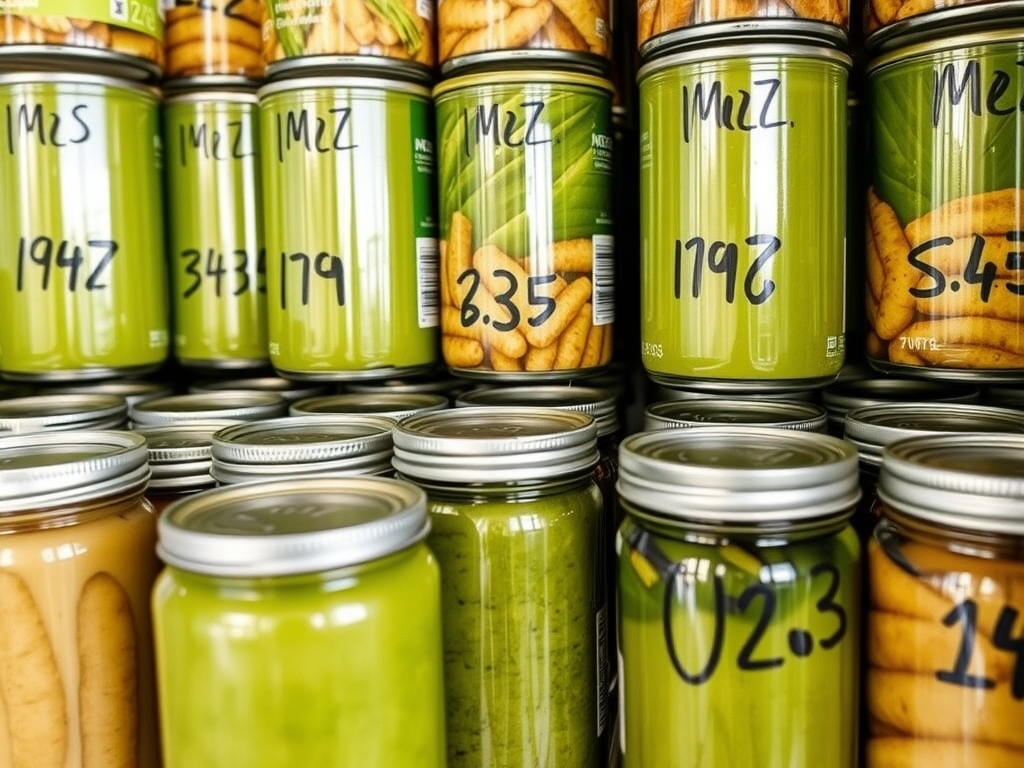
- FIFO shelving: new cans go behind old — the one physical habit. A marker date on every lid (month/year, big) makes the whole system legible at a glance.
- “Best by” honesty: on canned and dry goods these are quality suggestions, not safety deadlines — commercially canned food stays safe years past the stamp (discard only bulging, leaking or rusted-through cans). Your rotation should make this academic anyway.
- The quarterly pantry dinner: once a season, cook two or three dinners only from the pantry — it rotates the slow movers, tests your recipes-under-constraint, and quietly reveals gaps (no can opener? no matches? better to learn on a Tuesday).
- Match the pantry to real recipes: the strongest pantries are five or six actual meals deep (chili night, tuna pasta, dal, fried rice) rather than a warehouse of ingredients that don’t combine.
Growing it past two weeks (only if you want to)
Two weeks covers the overwhelming majority of real disruptions. If resilience is your hobby, the expansion path stays boring and effective: deepen to a month of the same real food; add bulk staples in proper storage (rice and beans in sealed food-grade buckets with oxygen absorbers genuinely keep 10+ years — the DIY version of the survival bucket at a fifth the price); and let the garden take over more wings — the root cellar crowd, the preserved glut, the freezer. A homestead’s “emergency food” eventually stops being a category; it’s just the food system working.
One honest note on scope: this is household-disruption planning — outages, advisories, tight months. It’s the layer that’s useful every single year, which is exactly why it beats apocalypse shopping: the pantry that fed you through a rough week in February was already a success before anything dramatic ever happens.
FAQ
What food should I buy for an emergency supply?
Two weeks of shelf-stable versions of what your family already eats: rice, pasta, oats and dried beans as the backbone; canned protein (tuna, chicken, beans, peanut butter); canned vegetables, tomatoes and fruit; cooking oil, salt, spices, stock cubes and the flavor items that keep morale up; plus a no-cook corner (crackers, nut butter, shelf-stable milk). Buy it gradually — a few extra items per grocery trip — and skip anything nobody eats now; unfamiliar “survival food” is the stuff that expires unused.
How much emergency food should a family have?
A two-week supply is the honest working target — it covers the disruptions that actually happen (storm outages, illness weeks, supply hiccups, tight months) and is achievable in about three months of adding $10 per grocery trip. Count it in real meals rather than calories: five or six dinners your family already cooks, times two-plus rounds, with breakfasts and snacks. Expand toward a month only after two weeks is genuinely built and rotating — depth without rotation just manufactures expired food.
How do I keep emergency food from expiring?
Stop storing it separately — that’s the entire trick. Keep emergency food as the deep end of your everyday pantry: cook from it constantly, replace what you use each shopping trip, shelve new purchases behind old (first-in, first-out), and write big dates on lids. Food your household eats weekly cannot quietly expire. Add a quarterly “pantry dinner” night to rotate slow movers, and remember that best-by dates on cans and dry goods are quality estimates, not safety deadlines — intact cans stay safe well beyond them.
Are freeze-dried survival food buckets worth it?
As the foundation of home preparedness, no — they’re the expensive answer to a problem the ordinary pantry solves for a fraction of the cost, and unfamiliar food under stress is a real morale tax. Their legitimate niche is extreme-compact, decades-long storage after a real-food pantry exists, or genuine portability needs. If long-term bulk appeals, the DIY version — rice, beans and oats in sealed food-grade buckets with oxygen absorbers — delivers 10+ year storage of food you actually cook, at roughly a fifth of the bucket-kit price.
The pantry that carried you through one bad February week already paid for itself — everything after that is compound interest.
Keep reading
guides
How to Preserve Your Vegetable Harvest (2026 Beginner's Guide)
Drowning in tomatoes and zucchini? A beginner's guide to preserving your vegetable harvest — freezing, canning, drying, root storage and fermenting, and which method suits each crop.
guides
Root Cellar Without a Cellar: Store Months of Food With No Basement
No basement, no problem. Garage corners, buried barrels, sand boxes and in-ground trenches — honest ways to store potatoes, carrots, squash and apples for months.
guides
Emergency Water Storage: The 2-Week Supply Every Home Should Have
One gallon per person per day, 14 days, stored right — the honest guide to emergency water: containers ranked by budget, rotation, treatment, and the myths that waste money.